September 21, 2012

September 19, 2012

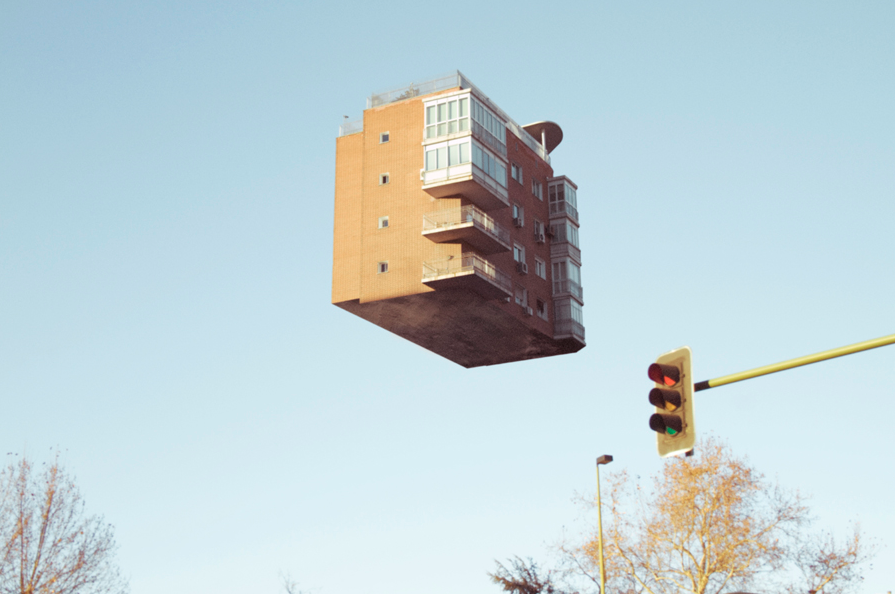
Photography - Jack Crossing


Graphic designer Jack Crossing created the concept of this unique piece of art: "This was a concept for a band in the states, they decided not to go with it. Instead, my brother's label is going to use it."

I very like it. One of these somehow undefinable works that inspire me.


September 15, 2012

Production Design Review # 1 (Part 2) - MINORITY REPORT (2002)

As I said, this movie contains a lot of kinetic, cinematic action which takes place in a futuristic environment.
I'd like to focus on some certain aspects now.

The present in the future

Minority Report presents a perfect combination of utopian and everyday life elements that result in a authentic futuristic vision.
You can recognize a lot of architecture, objects and clothes which seem to be right out of our time (in this case the 2000ies) or even older decades (especially some buildings and part of the environment, parks etc). This familiar parts of that "future" reconnects directly into our present and at the same time, state of the art technology (like highly advanced touch-screens, hovercraft vehicles, etc) which is developing faster and faster around us, is already established and almost ordinary in the film's present. The future becomes alive and authentic. And we can have a real look at it for about two hours. 
I very like this old/new combination, the "unfinished" future vision, which still has to potential to go further, to set new standarts again and again (e.g. transportation into outer space, which is not shown in the film). People still suffer from common cold (like the surgeon who removes John's eyes) or poverty, and some buildings still look like they'll be torn down soon (regarding the more modern, high-tech centers).


Emotions

John Anderton is a broken man. He's a secretly drug addict, highly motivated cop, driven by deep pain.
There're a lot of holographic screens, objects and projections in the film. Mostly seen with John, getting lost in his (restored) memories, involving his beloved son and wife. On the other hand, interactive, intelligent advertising media is always surrounding the future citizens of D.C. and John too, of course. They seem to "catch" their costumers on the streets and even in the darkest corners. Shiny, bright, transcendent, using the people's emotions, like they always did. But now in a (not so) far more sophisticated way.
Agatha, Arthur and Dash (the Precogs) are literally filled with the emotions of all the others and their own, uncontrolled minds as well. The three of them are haunted by visions of murders and everyday life memories of other people. The movie opens with one of these cruel visions, showing a husband, murdering his wife right after he discovered her with her lover. One very essential "murder scene" takes place in the woods, near a lake. The simple and natural environment of that vision also contributes to the gripping, subtle atmosphere of the movie. It is set quiet far away from the hyper futuristic buildings that represent John's "safe" and urban workplace. Another example for this old/new contrasts.


The horror and the darkness
 
Minority Report combines quiet a lot of different genre influences, and it does not only consist of the pure, high-tech sci-fi look.
It's not a real horror movie either, but there are some notions and scenes that evoke feelings of insecurity and unconscious horror deep inside me. The future that Spielberg and his team present us is shiny, transparent and actually quiet bright. But also with dark sides, which make us fearful and, as I said, uncertain about this "progressive" future.
The one-eyed man John is buying his drugs from, the monstrous apparatus which the surgeon uses to replace John's eyes, the living garden that literally catches its visitors, or the ambience in the precog visions in general, all these things seem quiet sinister. Although Spielberg's movies always contain a special kind of fearful atmosphere or tension, some of them more than others, Minority Report (and its predecessor A.I. - Artificial Intelligence as well) evoke that sort of primal fear and insecurity in a very sophisticated and stylish way.


 To be continued ... ;-)


September 13, 2012

Production Design Review # 1 (Part 1) - MINORITY REPORT (2002)


Every decade in cinema history has its own technological high peaks, and every few years people get the feeling that everything's possible on the big screen. One of the first epic steps must have been the first movie feature with sound. 
I can just imagine what an incredible new mind-opening experience that must have been. After that, and many other smaller progresses, the power of colours conquered the theaters, Judy Garland was able to walk on the famous yellow path, entering the Wizard of Oz' emerald coloured castle. Clark Gable and Vivianne Leigh were starring under the deep red sky during the american civil war in Gone with the Wind, another entirely new world and epic drama as well opened its gates.

At the same time, the range and versatility of special effects also evolved,  bringing a (yet) unexplainable magic to the people's cinematic experiences. Various tricks in editing, lighting, sometimes comparable to "real life" - magical tricks, were used in the very young film industry since the beginning of motion pictures at all. Just remember the legendary George Mélies (recently portrayed by Ben Kingsley in Martin Scorsese's Hugo) who was a true pioneer in film history and its world of special effects.

Many decades passed and Stanley Kubrick, Steven Spielberg or James Cameron (and of course a lot of others) set new standards in filmmaking, its technology and special effects. 
Kubrick always tried to push the boundaries of cinematic experience and perception, technically and philosophically. Designing his own "conditio humana", setting the viewer's eyes on new horizons, inside the characters and also into outer space, as seen in 2001-A Space Odyssey. 
James Cameron is basically a technical visionary. Somehow he's a master of cinematic action and action-dramas. Movement, dynamics, speed and emotional storylines are always some sort of main characters in his movies. Altough he created such iconic (human or human-like) characters like the Terminator, the Titanic lovers Jack and Rose, and the natives of Pandora, the Na'vi, his movies always look like highly sophisticated constructions of action-scenarios.
Steven Spielberg is, in my opinion, a genuine "producer of dreams" in filmmaking. And his works include everything what dreams are about - they're deeply emotional, they touch our souls, they scare us, let us feel the warmth and coldness inside us or on the screen, and they contain a lot of psychological and "physical" movement that seems impossible in real life, but nevertheless plausible in our dreams. A lot of Spielberg's movies are about children and childhood memories that are essential for the storys and the characters. And at the same time he is also an extremely innovative technical pioneer, similar to Cameron, Kubrick, or, for example, Peter Jackson.

In this post, I'm gonna write about Minority Report (2002), Spielberg's fourth film which is set in the science-fiction genre and leads us into a fascinating futuristic world, based on a novel by Philip K. Dick, for one more time.

I chose this one because all these aspects of action driven, emotional and extremely technologic design based cinema are included and I highly appreciate the way Spielberg created this (yesterday's ) future ...


The film takes place in Washington D.C., in 2054.
A new police department called "PreCrime" has been built to track down and arrest people who are about commiting murder in the near future. 
The heart of this phenomenal new method in chasing criminals are three young telephatic individuals called "Precogs", two men and a woman, who are able to see fragments of future events, especially violent acts and killings. The cops of PreCrime use a highly sophisticated technology to extract the important parts of these Precog "visions" and try to prevent every murder in the state of Washington before they happen. They've been very successful since six years and one of the most dedicated policemen in this new department is Chief John Anderton (played by Tom Cruise).
Anderton once lost his little son Sean, probably kidnapped or murdered, and he and his wife Lara got seperated shortly afterwards. They never knew what happened to Sean and since then, John is obsessed with chasing murderers with PreCrime. In private, he got addicted to drugs and dreams about the happier days with his son and wife.
One day, a Precog foresees a murder, and it looks like John is the perpetrator himself. Now, Anderton gets chased by PreCrime and tries to prove his innocence desperately. Therefore his must use his knowledge as a cop and find a way through a jungle of a high-tech future world and its darkest corners and characters.


In my next post, I'll focus on several aspects of the movie's production design.

To be continued ;-)


Spot # 2399384994839993291457674


A few months ago, on my way home.

August 13, 2012

Production Design - What is that ?

The Fountain (2006)


Movies don't really get famous by their production design. 
It's the actor's performance (excellent or awful, or at least their names), maybe the director's name (when he's famous enough), maybe, maybe the soundtrack, or maybe, maybe, maybe a special scene in the film's storyline that catch the average viewer's attention when he or she is choosing a movie for a saturday eve in front of the local theatre.
But most of the people give a damn on the rest of the movie's elements. 
And that rest is actually called the whole visual look of it.
This overall look of the movie contains (for example) all actors' and extras' costumes, every interior and exterior location seen in it, every single object and all things visible in the movie, used or unused by the characters, every kind of food and drinks that you can see, all the furniture, all the wallpapers, all the cars, all bicycles, all helicopters, all boats, motorcycles, airplanes, every kind of weapon, tanks, newspapers, cell phones, computers, tablets, watches, accessories, flowers, trees, grass, houses, apartments, and every corn of dust, rain, snow, dirty or clean windows, playgrounds, stairs, roofs, antennas, streets, freeways, villages, towns, cities, continents, views on earth from outer space, moons, stars, other planets - and - exactly all these things I just named again and again if the movie takes place on different places, different countries, different planets and maybe different universes.

That's what Production Design is all about.

You may think now that the actors' achievement and director who leads them are more essential than all this other crap I mentioned.
Well, sometimes you may be right. But If you want to create a perfect cinematic illusion that supports the characters and the storyline the best way it can, you need a good Production Designer. Someone who takes care about the whole extremely important rest of the project's visual look.

A Production Designer creates the world the movie takes place in.
An artist who realizes the director's vision of that world, which can be concrete or vague. He or she also works together very closely with the director of photography and the head of lighting. 
It's probably one of the most complex tasks, because of its extremely versatile nature.


from the top to the bottom / left to right : Eyes Wide Shut (1999), The Matrix (1999), Rear Window (1954), Minority Report (2002), Concept Art 1 & 2 for Se7en (1995)

August 08, 2012

Production Design - Creating the look of a movie


2001 - A Space Odyssey (1968)


Creating new worlds has always been my great passion. And I absolutely love every kind of movies in general.
 

Especially the ones which reveal great art work and production design to the viewers, let us dream and feel the celluloid magic when we watch them.
One of my very first cinematic (or at least tv) experiences was Spielberg's E.T - The Extraterrestial or The Neverending Story by Wolfgang Petersen. Movies that take you on a marvellous journey into fantastic worlds, fairy tales, long before Avatar and Peter jackson's Lord of the Rings Trilogy. Following these movies from the early 80ies, I made hundreds of drawings of Darth Vader, E.T. and many robots and monsters, trying to imagine my own fantasy universe and I became more and more a true cinephile. 

Consuming all the 90ies blockbusters from The Rock to Independece Day, I also discovered the works of the most famous directors of all time like Stanley Kubrick, Elia Kazan, John Houston, Charles Chaplin and of course so so many more.

Then, I started to study Scenographical Design at the School of Applied Arts in Zurich, combining the knowledge of stage design, exhibition design, set design and spatial design, and finishing with a Bachelor degree. Therefore I explored the world of miniature models too, which can express so much moods and visualize concepts of the bigger scaled space.

Now, I finally want to write about my personal favourite movies concerning their production design.
Don't get me wrong, I've been working on several short films by myself as a production designer, set decorator and concept artist, and I'm absolutely aware that film projects always unite the efforts and work of a lot of creative minds. Directors, writers, producers, cinematographers, editors, casting directors, costume designers, lighting operators, musicians, and many more, everyone makes a contribution to the final look and atmosphere of the movie. Especially cinematography (including the lighting) and production design is always very tightly connected of course.
Nevertheless, I want to try to focus on the production and set design and explore its concepts and influence on my personal reception.

So far, I intend to present you the following films:
 

Se7en (1995)
Minority Report (2002)
Blade Runner (1982)
Alien (1979)
The Neverending Story (1984)
Rear Window (1954)
2001 - A Space Odyssey (1968)
Eyes Wide Shut (1999)
Janghwa, Hongryeon (2003)
Gattaca (1997)
 

There's a lot of work to prepare the posts about all these movies, but I'm really eager to do it and I already started ...
I'm not sure yet in which order I'm gonna present them to you, maybe I'll also add further movies. But you'll get them all ;-)


July 05, 2012

Photography - Mark Mawson


What is so fascinating about watching a person, falling into deep water, seen from the underwater perspective?
I guess many people would say, it's the slow motion effect.
But is that the only thing? Of course not. There are also the "wings of water" that suddenly grow on the person's arms, legs, torso and head, the streams of water that lay on the falling, sinking body like fluid, transparent clothes. When you're watching air and water combining, different spaces that add and separate each other at the same time under the surface of an ocean. Or maybe just a glass of water...

Another thought of me is about one of the oldest, most referred and so highly influential motive of flowers.
It would definitely fill more than just a few books or blog pages to write about the historical, poetical and still mysterious ambience of these silent beings here.
Well, the thing about water and flowers of every kind is the fact that I discovered an artist who manages to combine the character and looks of both elements in a really magical way. When I look at his works, their style and technique seem familiar, but they also have a literally deeper impact on me.

Love, tenderness, sadness, loneliness, darkness. You name it, when all these moods and feelings fulfill your heart and mind for a second at the same time, you could be stunned by one of the photo series by Mark Mawson.


Mawson is an award-winning british photographer with many years of experience in capturing a full spectrum of people and places and specializes in underwater shootings. I'm gonna show you a part of his "Aqueous" series, but the selection of pictures was a very tough one again. His website contains a wide range of other works, but especially the Aqueous ones is represented by several galleries.

www.markmawson.com 
(and do not forget to check out his Aqueous movie!)

All pictures in this post are copyright by Mark Mawson.


July 03, 2012

Photography - Rafa Zubiria


Do you remember the famous scene from "The Wizard of Oz", Judy Garland's farmhouse blown up by a tornado, getting higher and higher into the sky?
Spontanesly, that's what crossed my mind when I first spotted one of Rafa Zubiria's pictures.

But when I kept looking at them, a mixture of some other, far more subtle moods took hold of me. I remembered my childhood, dreaming of physically impossible things like flying houses, elephants balancing on a mouse' paw, or even myself, hovering over the city roofs. When I took a walk in green parks with my parents, passing bushes and flowers, simple but nevertheless idyllic places that made me feel safe and imagine things.
The visual style and quality of Zubiria's series "No Way Home", looking a little bit like old polaroids or family pictures, treasured in thick photo albums since decades, contribute to these feelings and memories.
All of them do have that impact on me, but of course, some of them are clearly more recognizable as post digital work as well. Maybe that's the only detail I'm annoyed at it. If you wanna present an illusion, it should be done in a nearly perfect way. Filip Dujardin, the Belgian photographer whose works I portrayed in my last post, did that quiet well (at least you need a bit longer to figure out the "fake truth" of them).

Both photographers' series share some kind of playful, dreamy aspect, but in a different way. In my opinion, especially Zubiria's work with its title "No Way Home" evokes a more melancholic character. But anyway, right at this moment, it feels quite wrong the me, comparing the two of them directly. There are similarities, but also clear differences that lead back to their different motivations and backgrounds I think.


If you wanna see more of his very interesting, mysterious and beautiful work, also join:
www.rafazubiria.es
 

All pictures in this post are copyright of Rafa Zubiria.


June 05, 2012

Photography - Filip Dujardin


The first label I introduced on this blog was "Soviet Visions" (which you already noticed, I hope). Portraying old, used or unused buildings and sculptures in former Soviet states.
In a way, I return to these strange, abandoned giants now by visiting some other "constructions" that catched my eye some time ago. I can still feel the spirit of the Soviet buildings, when I look at these pictures of Belgian photographer Filip Dujardin.
 
Initially working as an architectural photographer, he felt the urge to create his "own" buildings instead of documenting the works of others. So he simply started to use his children's Lego system to figure out new shapes and structures for buildings, continuing with digital modeling, photoshop, etc., but still using a lot of real footage as source material for creating the surfaces and details of his fictional constructions.
And yes, they are fictional. On the first sight, the pictures seem to be real, showing old or post modern architecture from the 60ies or 70ies (which Dujardin especially likes, because of their patina that helps him to create the haptic authencity). 
The fact that many people are guessing if these buildings are real or not, looking at them for the first time, turns his work into an interesting riddle.

I'm very keen on buildings from the 60ies and 70ies in general. And the ex-Soviet, abandoned and strange ones in particular. Dujardin's works goes in the same direction, but it contains a new kind of quality that fascinates me.
There's an atmosphere of clarity and pureness in it, that captures me and it feels like another dream to me. Like the one I described before in my blog labels "Digital / Concept Art" about Daniel Dociu and "Animation" about the short movie Quest, that dream has some influence on me and my creative work…

I'm walking upon a smooth hill, and there's a buidling on the top, surrounded by a field of grass. Very clean, shiny and kind of post modern, with a lot of glass. It seems to have two quiet high levels, but with no light in them. 
The weather is cloudy, windy and rainy, but I can't feel any raindrops on my skin. Somehow, a gentle sunray enlightens the upper part of the house. That's why I believe I can recognize a telescope, standing behind the big windows on the front. But nobody's there. I'm walking slowly thru the grass towards the house. All alone.

 
Filip Dujardin was born 1971 in Gent, Belgium. He studied history of art, specializing in architecture and is a photographer of architecture, interiors and design. Real and some different ones.